

February 18, 2026
- URL
This guide deep dives into the definitions, testing procedures, differences, applications and other essential aspects of IP68 vs. IP69 ratings, shedding light on their significance in the design and application of modern electronic devices.
The IP code, also known as the International Protection Marking or Ingress Protection, classifies and rates the protection provided by an enclosure against solids (like dust) and liquids (like water). The IP code consists of two digits, each representing a specific level of protection. The first number signifies protection against solid particles, while the second number represents immunity from liquid particles.
An IP68 waterproof rating signifies that IP68 enclosures are dust-tight and capable of withstanding immersion beyond 1 meter in water for a specified time (usually 30 minutes to 1 hour). The “6” in the first digit indicates complete protection against dust and other solid particles, while the “8” in the second digit indicates its ability to withstand water immersion beyond 1 meter.
To achieve an IP68 rating, a device must undergo strict testing. The dust test involves exposing the device to a controlled amount of dust in a dust chamber, ensuring no dust particles enter the enclosure. In the water immersion test, the device should continue functioning normally after the test to obtain the IP68 certification.
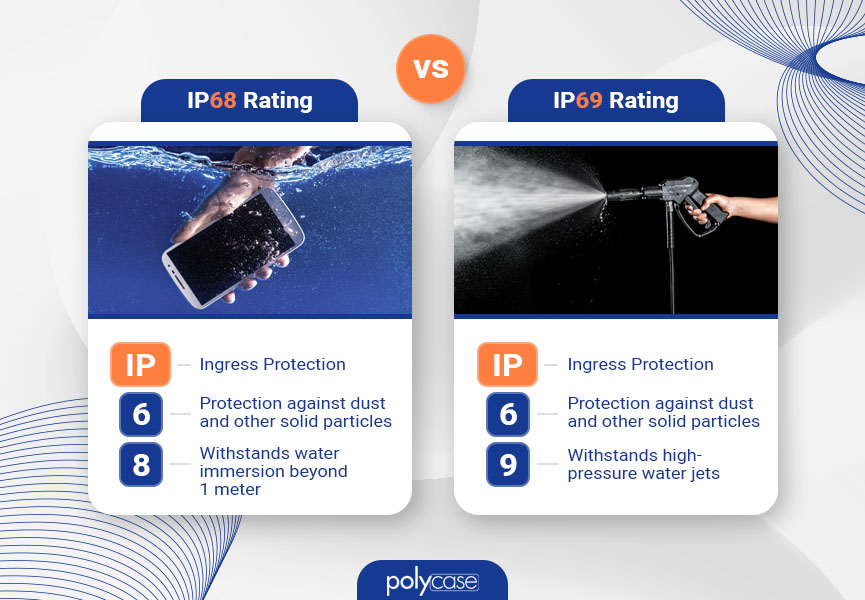
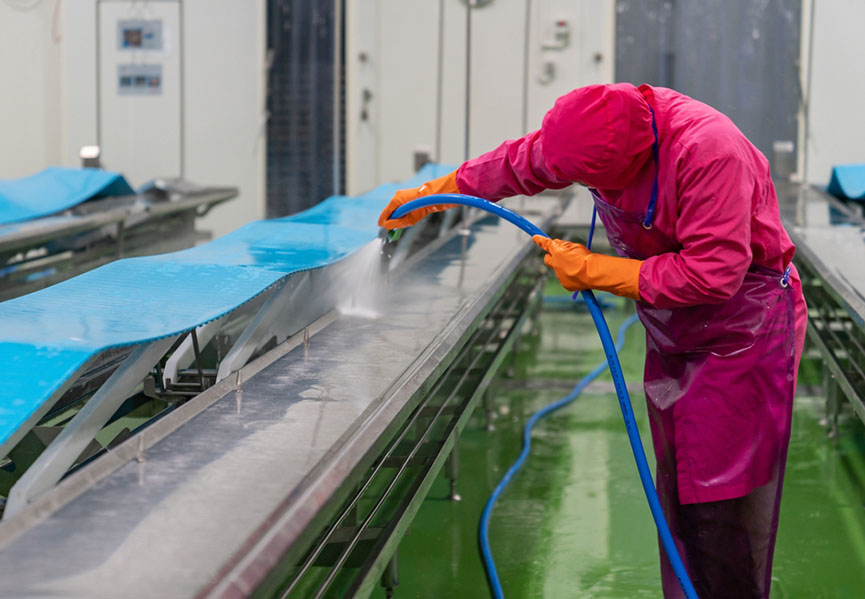
The IP69 rating offers protection against high-pressure liquids and steam cleaning, in addition to being dust-tight. The “6” in the first digit signifies the same dust protection as in IP68. The “9” in the second digit indicates the device’s ability to withstand close-range high-pressure, high-temperature water jets (ranging from 80 to 100 bar) and steam cleaning.
To achieve an IP69 rating, devices must undergo additional and more intensive testing compared to IP68. The high-pressure water jet test involves subjecting the device to powerful water jets from multiple angles and distances. The device’s enclosure, which can be a NEMA enclosure, should prevent water ingress, ensuring its internal components remain protected. Additionally, the steam cleaning test simulates intense cleaning conditions, ensuring the device remains impervious to high-temperature steam.
While both IP68 and IP69 ratings offer a high level of protection, there are distinct differences that make each rating suitable for different applications and environments. These differences include the following:
Selecting the correct enclosure material, such as polycarbonate or ABS, is just as vital as the rating itself. Both ratings find use in various industries depending on environmental conditions.

While both IP68 and IP69 ratings offer significant protection against dust and water, they each come with their advantages and limitations that are essential to consider when choosing the appropriate rating for a specific application.

Selecting the appropriate IP rating for electronic devices depends on various factors, including the device’s intended use, the environmental conditions it will be exposed to, and the cleaning requirements of the application.
For general outdoor applications, IP66 or IP67 may provide sufficient protection against dust and water, while IP68 is ideal for scenarios requiring continuous immersion. On the other hand, IP69-rated devices are more suitable for industries like food processing, medical equipment and agriculture, where sterilization and high-pressure cleaning are critical. In these demanding environments, the IP69 rating offers the highest level of protection available.
Ultimately, IP68 and IP69 are crucial ratings that determine the durability of your electronic devices across various segments. Understanding these testing procedures ensures the optimal performance and longevity of your equipment in the field. At Polycase, finding the right ABS enclosure, polycarbonate enclosure and more can be simple with our countless options.
Designed for dependable IP68 rated performance, these enclosures are built to keep water and dust out in demanding environments. The HN Series offers reliable protection with flexible configuration options.
Image Credits: Hodoimg, Hermiadi Eher, showcake, Luckyest, Chikena, DedMityay, Dizfoto, Deviney Designs, liu yangjun, zblaster, LightField Studios via Shutterstock.com