

May 4, 2018
- URL

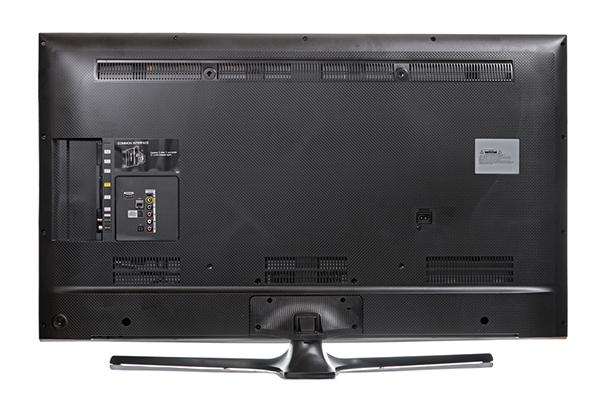 A television has openings to allow the enclosed electronics inside the case to vent heat. The slots are typically small enough to prevent fingers — even a child’s — from touching the components, but the cutouts probably wouldn’t prevent you from poking around inside the case with a piece of wire or a paperclip. They certainly won’t prevent dust from settling inside the enclosure, so most television casings would have an IP Rating of “2” for the ingress of solids. Now think about the remote control that came with that television; it doesn’t have any slots or vents. The case is solid, and the seams are well-fitted. The battery compartment closes completely, and you can’t see the interior of the remote control. This item is very protected from any solids entering it — even the smallest dust particles. That indicates that the IP Rating is probably as high as a “5” for solids. It’s not impenetrable, but it is extremely unlikely that much dust can settle in the enclosure.
  Finally, look at the newest generation of smartphones, like the Samsung Galaxy S8 or S9 and the Apple iPhone X. These phones are almost 100 percent sealed. The battery is no longer accessible by the user, and it requires special tools to gain access to the inside of the phone. The enclosure has virtually no visible seams, and all buttons are encased. The speaker, earpiece and microphone have all been sealed so that dust, even at a microscopic level, can’t enter the unit. These phones carry a documented maximum IP Rating of “6” against solid intrusion.
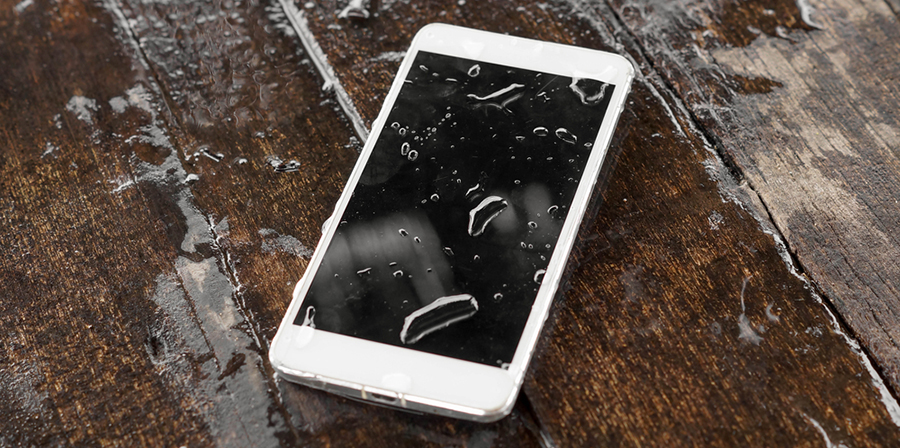 The enclosure is designed for indoor use, and it is not recommended for installation in areas with high humidity, like bathrooms or outdoor spaces. Sprayed water would almost certainly get through the slots and inside the case, meaning the IP Rating for water ingress is going to be a “2.” Coupled with the IP solid score of “2,” the television would be rated IP22. As noted earlier, remote controls don’t have any slots or vents. The case is solid, and the seams are well-fitted. Even the buttons have some degree of clearance from the case. Whereas you can use a spray bottle to clean the remote control, you certainly wouldn’t submerge it in water. The battery compartment, while fitted snuggly, is not gasketed or sealed. If the unit was sprayed with water for a minute or two, the liquid would begin to seep inside. These factors combined give the remote control a water protection rating of “3.” Put that together with the previous solid protection rating of “5,” and the remote control has a rating of IP53. Finally, we have our new models of smartphones. Users can clean them under a running tap. If you forget to take it out of your pocket before jumping in the pool, the case can withstand the immersion up to five feet deep. Even if you didn’t take it out of the water for half an hour, there would be no issue from water ingress. The newest models of smartphones can even withstand the pressure of a water jet without allowing water to get inside. That kind of water protection would carry the maximum “8” rating. And when combined with the maximum solid protection rating of “6,” the iPhone X has a rating of IP68.
 Using the IP Rating Codes is essential to providing the end user a universal, qualified description of an enclosure’s capabilities. Furthermore, having a universal standard created by a respected industry organization like the IEC provides manufacturers with the ability to design and engineer customized enclosures that take your electronics case from plain to powerful. You can customize enclosures with cutouts and digital printing while maintaining the IP rating when you utilize IP rated accessories like cable glands. An enclosure manufacturer like Polycase makes creating the right solution easy. Utilizing a supplier like Polycase that offers a large selection of IP rated enclosures along with precision machining and digital printing can keep costs down and avoid production delays. If you’re interested in customized IP rated enclosures, check out the chart below to determine the necessary level of protection and then get a 90 second quick quote from Polycase today!
| Solid Protection | ||
| Level | Object size protected against | Effective against |
| 0 | Not protected | No protection against solid objects |
| 1 | >50 millimeter | Protection against large surfaces like the back of the hand |
| 2 | >12.5 millimeter | Protection against finger-sized objects |
| 3 | >2.5 millimeter | Protection against thick wires and like objects |
| 4 | >1 millimeter | Protection against wires, screws, etc. |
| 5 | Dust protected | Some protection against dust and complete protection against contact |
| 6 | Dust tight | Complete protection against dust and contact |
| Water Protection | ||
| Level | Object size protected against | Effective against |
| 0 | Not protected | Nothing |
| 1 | Dripping water | Protection against 10 minutes of dripping water |
| 2 | Dripping water when tilted up to 15 degrees | Protection against 10 minutes of dripping water when tilted 15 degrees from normal position |
| 3 | Spraying water | Protection against 5 minutes of spraying water at any angle up to 60 degrees from the vertical |
| 4 | Splashing water | Protection against 5 minutes of splashing water |
| 5 | Water jets | Protected against at least 3 minutes of water spraying from a 6.3-millimeter nozzle from any direction |
| 6 | Powerful water jets | Protection against at least 3 minutes of water spraying from a powerful nozzle (12.5-millimeter) from any direction |
| 7 | Immersion up to 1 meter | Protection against 30 minutes of water up to 1 meter of submersion |
| 8 | Immersion beyond 1 meter | Protection against continuous immersion in water up to depth specified by the manufacturer |