

November 2, 2026
- URL
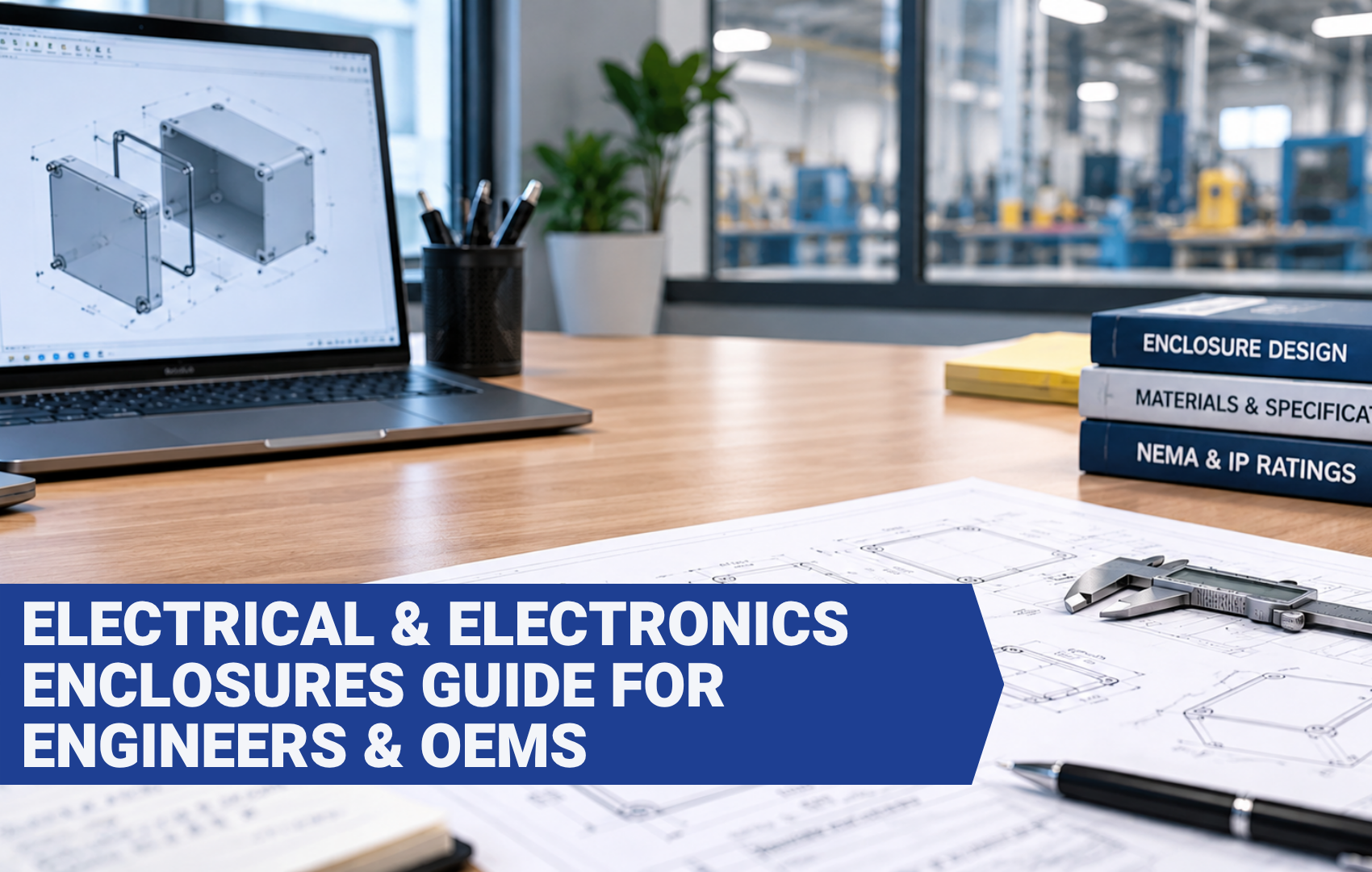
Selecting an enclosure is a critical step in electronic product development. For engineers and original equipment manufacturers (OEMs), an enclosure must do more than protect internal components. It must support mechanical integration, environmental performance, efficient assembly, and long-term production requirements.
From industrial monitoring systems and communications equipment to commercial electronic devices, enclosure selection can influence product reliability, manufacturing costs, and development timelines.
This guide examines the key engineering considerations for selecting electrical and electronics enclosures, including material performance, environmental ratings, component integration, customization, and production sourcing.
Evaluating these requirements early in the design process can help reduce unnecessary revisions and avoid compatibility issues during production.
Before selecting an enclosure, engineers should establish:
An enclosure that meets dimensional requirements but lacks suitable environmental protection or mounting features may create additional engineering challenges.
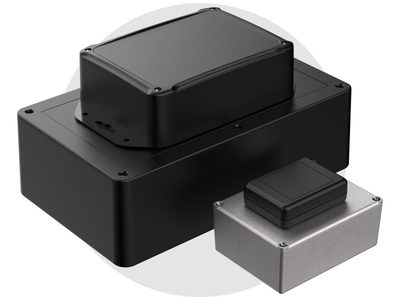
Material selection influences an enclosure's durability, environmental resistance, electrical characteristics, weight, cost and manufacturing flexibility.
Common electronics enclosure materials include polycarbonate, ABS, aluminum, and steel.
Polycarbonate and ABS are widely used thermoplastics for electronic housings, but their properties make them suitable for different applications.
| CONSIDERATION | POLYCARBONATE | ABS |
| Impact resistance | Excellent (well-suited for demanding environments) | Moderate (well-suited for general purpose electronics) |
| Outdoor suitability | Easily withstands temperature fluctuations and UV-stabilized grades can support prolonged sun exposure | Standard grades are generally better suited to indoor use where sun exposure and temperature fluctuations are kept to a minimum |
| Weight | Lightweight | Lightweight |
| Machinability | Suitable for CNC machining | Suitable for CNC machining |
| Cost | Often higher, premium costs | Generally economical |
| Common applications | Industrial controls, telecommunications, and agricultural technology | Indoor electronic devices, instrumentation, and audio/visual equipment |
Actual performance depends on the specific material grade, enclosure design, and operating conditions.
Polycarbonate is often preferred when impact resistance and demanding environmental conditions are priorities.
ABS may be appropriate for indoor electronic products where cost efficiency, dimensional suitability, and general-purpose durability are important.
Explore Polycarbonate Enclosures
Metal enclosures may be appropriate when an application requires thermal conductivity, premium strength, or electromagnetic interference (EMI) shielding.
Aluminum offers relatively low weight and good thermal conductivity, making it useful for instrumentation and electronic equipment.
Steel and stainless steel provide durable construction for industrial applications.
However, metal construction introduces additional design considerations, including grounding, corrosion protection, and wireless signal performance.
For products incorporating internal antennas, enclosure material and antenna placement should be evaluated together.
Polycase Engineering Tip: When selecting an enclosure for an OEM application, review the internal mounting boss locations and available wall space before finalizing the PCB layout. Designing around an existing enclosure's dimensions and mounting features can reduce the need for modifications and help simplify the transition from prototyping to production.
An electronics enclosure must accommodate more than the physical dimensions of a circuit board.
Engineers should evaluate internal geometry, mounting locations, connector clearances, wiring, and assembly requirements before selecting a housing.
External enclosure dimensions do not necessarily represent the available internal space.
Internal mounting bosses, wall thickness, draft, geometry, and other molding features can affect usable dimensions.
When evaluating enclosure fit, consider:
Reviewing 2D drawings and 3D models can help identify potential fit issues before prototypes are assembled.
Many plastic electronics enclosures include molded mounting bosses designed to support internal circuit boards or panels.
Because these features are incorporated into the original mold, their locations cannot be changed without modifying the enclosure design or tooling.
When existing bosses do not align with a PCB layout, alternative solutions may include mounting panels, compatible standoffs, or machining modifications.
Selecting an enclosure early in PCB development can allow designers to account for available mounting features rather than adapting the completed board later.
Connector placement influences enclosure accessibility, assembly efficiency, and environmental sealing.
CNC-machined openings can accommodate cable glands, switches, displays, and other components.
However, cutout locations should account for wall geometry, internal components, and critical environmental protection features (such as gaskets).
For waterproof enclosures, the completed assembly must be evaluated to determine whether modifications affect the intended protection rating.
Environmental protection is particularly important for electronics installed in industrial facilities, outdoor equipment, or locations exposed to dust and moisture.
NEMA and IP ratings provide standardized ways to describe enclosure protection characteristics.
Common ratings include:
| RATING | RELEVANT PROTECTION |
| NEMA 4 | Windblown dust, rain, splashing water, and hose-directed water |
| NEMA 4X | NEMA 4 protection with additional corrosion resistance |
| NEMA 6P | Prolonged submersion under specified conditions |
| IP65 | Dust-tight and protected against water jets |
| IP66 | Dust-tight and protected against powerful water jets |
| IP67 | Dust-tight and protected against temporary immersion under specified conditions |
NEMA and IP ratings are not directly interchangeable. Engineers should verify the specific requirements and documented ratings of the selected product.
Machining an enclosure introduces openings that affect its environmental sealing.
Cable glands, connectors, vents, and other installed components must be appropriate for the intended exposure conditions.
A rated enclosure does not automatically retain the same protection level after modifications.
When environmental protection is critical, the completed assembly should be evaluated or tested against the applicable requirements.
Enclosure selection can influence the thermal and electrical performance of an electronic product.
Electronic components generate heat during operation. In sealed enclosures, limited airflow may increase internal temperatures.
Engineers should evaluate:
Depending on the application, thermal management may involve heat sinks, conductive mounting, enclosure sizing, or purpose-designed venting solutions.
Thermal analysis or testing may be necessary to verify performance under expected operating conditions.
Metal enclosures can support electromagnetic shielding when properly designed, but seams, openings, cable penetrations, and grounding affect overall shielding performance.
Plastic enclosures generally allow greater radio-frequency transmission than continuous metal housings, making them useful for many wireless devices.
However, plastic construction alone does not guarantee acceptable wireless performance or electromagnetic compatibility for every application.
Engineers should evaluate the complete electronic assembly against applicable requirements.
OEMs frequently face a decision between developing a fully custom enclosure and adapting an existing design.
Standard enclosures can reduce development complexity by eliminating the need to create new enclosure tooling.
Potential benefits include:
For many commercial products, an existing enclosure can meet the required specifications with limited modifications.
Secondary customization allows OEMs to adapt an established enclosure to their specific product design.
Polycase offers customization capabilities including:
CNC Machining: Precision holes, cutouts, and other modifications for connectors, switches, displays, and cable entries.
Digital Printing: Application of product branding, operating instructions, identification, and graphics.
Laser Marking: High-contrast markings on compatible materials for identification and coating removal.
Enclosure Accessories: Compatible mounting panels, DIN rails, and other components that support equipment integration.
Customizing a standard enclosure can reduce the need for dedicated molds while supporting product-specific functionality and branding.
Explore Polycase Customization Services
A fully custom enclosure may be justified when a standard housing cannot meet essential dimensional, mechanical, or functional requirements.
However, custom tooling typically introduces additional engineering requirements, time, and manufacturing costs.
Before committing to a new mold, OEMs should determine whether an existing enclosure can satisfy the design requirements through machining, accessories, or modest product-design adjustments.
An enclosure that performs well during prototyping must also be practical to source throughout the product lifecycle.
For OEM manufacturers, reliable product availability, domestic manufacturing, technical documentation, and customization capabilities can be just as important as material specifications and environmental ratings.
When evaluating an enclosure supplier, engineering and purchasing teams should consider the following factors.
Reliable enclosure availability is essential for maintaining production schedules, meeting customer deadlines, and minimizing supply chain disruptions.
Polycase manufactures many of its plastic enclosures in Avon, Ohio, USA, giving customers access to American-made enclosure options backed by domestic manufacturing operations.
For in-stock, non-customized products, orders placed before 3:00 p.m. Eastern Time ship the same business day (M-F), helping OEMs quickly source enclosures for prototyping, testing, and production needs.
This combination of domestic manufacturing, stocked inventory, and fast order fulfillment can help manufacturers reduce procurement delays and keep projects moving.
Access to accurate technical documentation allows engineers to evaluate enclosure compatibility before committing to a design.
Polycase provides detailed product specifications, downloadable 2D drawings, and 3D CAD models to support enclosure selection and mechanical integration.
These resources help engineering teams evaluate internal dimensions, mounting configurations, component clearances, and enclosure modifications during the design process.
By incorporating enclosure specifications early in product development, OEMs can reduce the risk of costly design changes later.
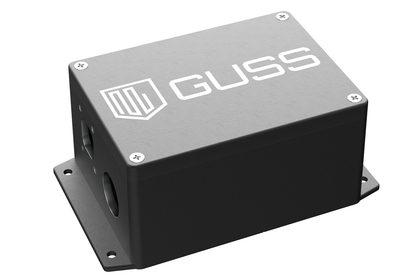
For OEM applications, an off-the-shelf enclosure may provide the right dimensions and material but still require product-specific modifications.
Polycase offers in-house customization services, including:
These capabilities allow OEMs to customize standard enclosures without the cost and lead time associated with developing new injection molds.
Explore Polycase Customization Services
For manufacturers producing equipment in recurring quantities, consistency and repeatability are important purchasing considerations.
Polycase offers established enclosure series with standardized dimensions, materials, and various configurations.
Using a standard enclosure platform can simplify product design, assembly planning, and repeat purchasing while reducing the need for custom tooling.
For applications requiring machining or printing, utilizing the same vendor for every order allows for consistent results, savings on one-time-fees, and support from people who already understand your project's needs.
The lowest enclosure unit price does not necessarily translate to the lowest overall production cost.
OEM purchasing teams should consider:
By combining American-made enclosure options, stocked products, engineering resources, and in-house customization services, Polycase helps OEMs simplify enclosure sourcing and move efficiently from product development to production.
Before finalizing an enclosure for an OEM product, verify the following:
Addressing these considerations early can help reduce engineering changes and support a more efficient transition from prototype to production.
Engineers should prioritize operating environment, material properties, size, internal component requirements, required protection ratings, mounting/installation method, customization and production needs. The appropriate enclosure must satisfy both technical performance and manufacturing requirements.
Polycarbonate is often preferred for demanding industrial environments because of its impact resistance and availability in outdoor-suitable designs. ABS can be a cost-effective option for many indoor applications. Final selection should reflect the specific material grade, enclosure construction, and environmental requirements.
Yes. Machining introduces openings that may compromise environmental sealing. Cable glands, connectors, and other installed components must be selected with NEMA and IP ratings in mind if it's critical for the project. The completed assembly should be evaluated against the required protection level.
Yes. Standard enclosures can often be customized through CNC machining, digital printing, laser marking, and compatible accessories. This allows manufacturers to adapt existing housings without investing in fully custom enclosure tooling.
Engineers should confirm component fit, material suitability, environmental protection, size (internal and external), machining specifications, technical documentation, and supply availability. Prototype validation is recommended before committing to production.
One approach is to select an existing enclosure early in product development and design internal components around its available dimensions and mounting features. Using standard tooling with secondary customization may reduce upfront costs compared with developing a completely new mold.
Polycase offers a broad selection of plastic and metal electronics enclosures designed for industrial, commercial, and electronic equipment applications.
With available technical documentation, a range of enclosure sizes and configurations, and in-house customization services, Polycase helps engineers and OEM manufacturers move from enclosure selection to finished product integration.