Designers of electrical and electronic devices must take many factors into account, but temperature rise is among the most important. All electronic components generate some amount of heat, and controlling the accumulation and dissipation of heat inside an enclosure is fundamental to ensuring that your device works properly.
In this article, we’ll discuss the basics of calculating temperature rise inside enclosures, and we’ll also quickly review some options for dissipating the heat produced inside an enclosure — from ventilation to heat sinks to internal air conditioners. First, let’s cover the basics of how electrical components create that heat.
What Creates Heat Inside an Enclosure?
Many of the electrical and electronic components that are protected by electronic enclosures generate heat when power flows through them. Types of components that often generate heat include:
Power supplies
Semiconductor devices
Servo drives
Programmable logic controllers (PLCs)
Variable frequency drives (VFDs)
Starter assemblies
Relays
Inverters
Terminal blocks
Since this list includes many of the most critical elements of industrial control panels and power distribution systems, it’s imperative that your device and enclosure are designed correctly to avoid overheating. The best way to learn about each component’s heat generation characteristics is to check the specifications provided by its manufacturer. You’ll find a number, usually measured in watts, that represents the component’s heat load.
Factors That Affect Enclosure Temperature
In addition to the heat generated by the components inside the enclosure, other factors affect the temperature rise, including:
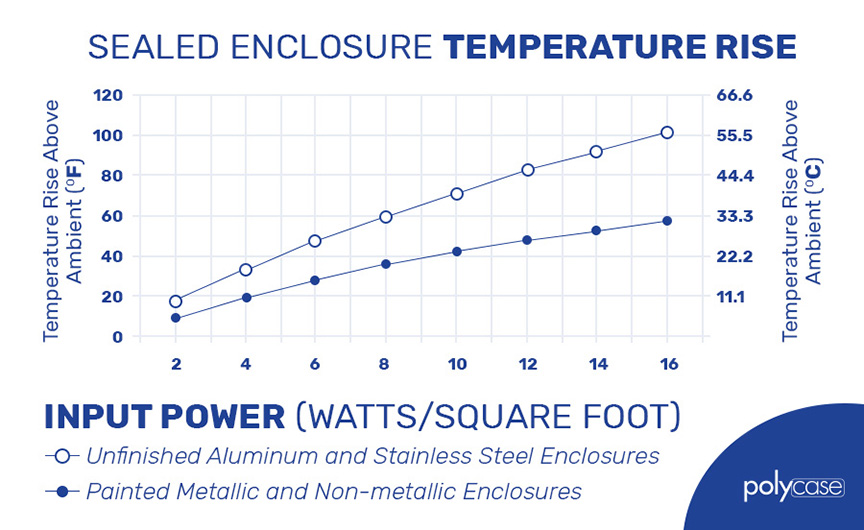
Certain types of materials and finishes will dissipate heat more effectively than other types will. Painted steel and polycarbonate are known for their ability to radiate heat more effectively than other materials such as stainless steel or unfinished aluminum.
Since heat rises in air, many vertically mounted enclosures can have internal temperature differences that make them hotter at the top than they are at the bottom.
The material composition of the wall that the enclosure is mounted on will affect heat dissipation.
Environmental conditions outside can increase the internal heat load if the ambient air temperature heats the enclosure material. Outdoor enclosures in direct sunlight may absorb solar heat. Enclosures painted in white or other light colors will absorb less heat than enclosures painted in black or dark colors.
The orientation of the enclosure when mounted (horizontally or vertically) will also affect how heat dissipates inside the enclosure. Horizontally mounted enclosures may experience significantly more complex heat transfer mechanisms than vertically mounted enclosures.
Remember to keep these factors in mind when performing calculations about an enclosure’s heat levels.
How to Calculate Temperature Rise Inside Enclosures
Here’s a simplified set of steps for calculating an electrical enclosure’s temperature rise:
First, find the input power, expressed in watts per square foot. Take the amount of heat dissipated within the enclosure in watts and divide it by the enclosure’s surface area in square feet.
On the graph below, find the input power in watts per square foot on the bottom axis. Draw a vertical line from that number until you intersect one of the temperature rise curves. Use the upper curve if your enclosure is made from unfinished aluminum or stainless steel, and the lower curve if your enclosure is non-metallic or painted metal.
Draw a horizontal line from your intersection point to the graph’s vertical axis. This is the approximate number of degrees by which your enclosure’s internal temperature will rise above the ambient temperature.
These steps will help you gain a basic idea of your enclosure’s estimated total heat load. However, it’s always important to have an electronics engineering professional do a detailed work-up of the enclosure’s temperature rise, particularly when designing a mission critical device that can create safety hazards if it fails.
Heat Dissipation Measures
Device manufacturers use several types of equipment and thermal management techniques to dissipate the heat generated inside an enclosure, including:
Surface Area Dissipation (SAD): The simplest method of controlling heat in an enclosure, surface area dissipation is a passive method that relies on the natural radiation of heat via the enclosure’s surface area. SAD may offer sufficient heat dissipation for smaller enclosures that don’t house components with high power draws, but many devices will need something more.
Venting: One of the simplest methods to achieve heat dissipation, venting works by providing an air flow route that allows heated air to leave the enclosure. Polycase enclosures are available with custom cutouts that can be used for ventilation, or use our polycarbonate air vents and waterproof vents to create a durable solution for heat dissipation and pressure equalization while preserving your enclosure’s NEMA rating.
Forced Air: Forced air devices such as fans and internal air conditioning units can be highly effective enclosure cooling solutions. Enclosures with high levels of expected heat (either from internal components or ambient air temperatures) may need forced air ventilation.
Heat Sinks: These accessories are installed inside enclosures to transfer heat into one of two cooling mechanisms: a series of “fins” that give the heat a wider surface area to disperse through, or a liquid medium such as a coolant. In both cases, the heat sink directs heat away from components that may be vulnerable to it.
Need a little more information on how to calculate an enclosure’s heat retention and dissipation? Call our enclosure experts at 1-800-248-1233 or contact us online. We’ll be glad to assist.